4 Min Read
Seasonal flu refers to a respiratory infection that mainly affects the throat, lungs, and nose. This condition occurs due to the influenza Virus. If someone with the flu coughs, sneezes, or talks, they can infect people nearby. Symptoms are usually mild, but children and individuals with weak immune systems or chronic conditions are at higher risk and may need specialized care at a hospital setup.
Synopsis
What is Seasonal Flu?
Seasonal flu is a contagious respiratory illness caused by influenza viruses, primarily Type A and Type B. The influenza season begins in the fall and continues until winter. Unlike the regular cold, flu can make the body feel completely drained - fever, chills, body aches, cough, and sore throat are all part of the game. While many dismiss flu as “just a seasonal thing,” untreated flu can lead to complications like pneumonia, bronchitis, or worsening of chronic conditions.
Catching flu symptoms early, like sudden fatigue, fever spikes, and nasal congestion, allows timely intervention. The first sign is usually a scratchy throat, followed by a total energy crash within hours. For people who are juggling social life, travel, and work, even a mild flu can spiral into a week of downtime. That’s why early detection, flu prevention, and targeted treatment are key.
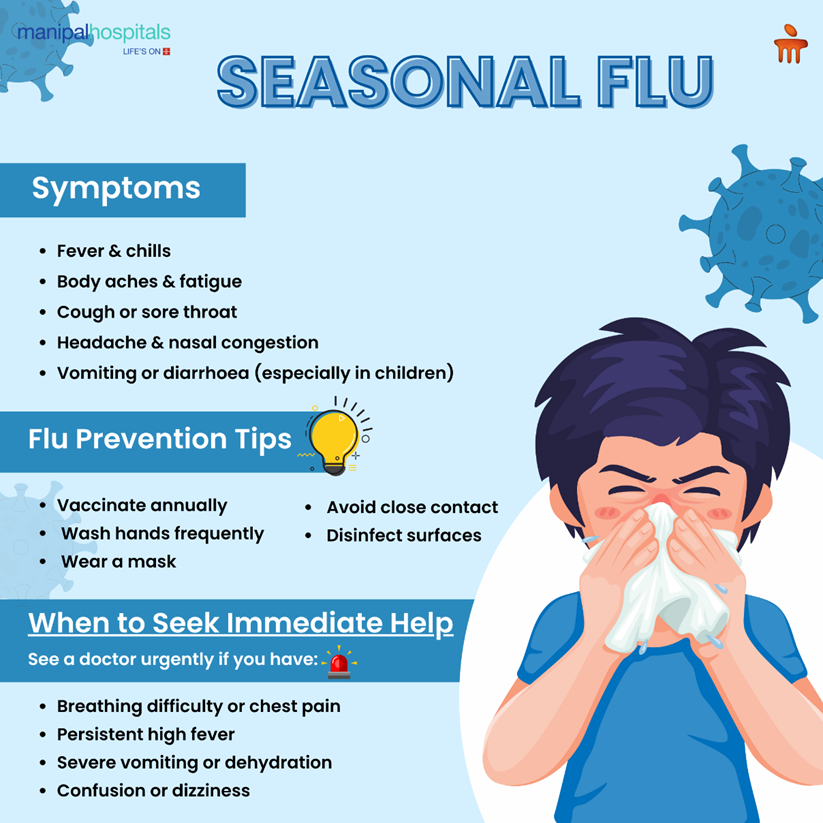
Recognising Flu Symptoms
Flu symptoms are mostly similar to those of a common cold; however, they tend to become more serious. Some common symptoms are:
-
Body aches
-
Cough
-
Chills
-
Fever
-
Sore throat
-
Headache
-
Stuffy or runny nose (congestion)
-
Feeling run-down or tired
-
Vomiting
-
Diarrhoea
It is crucial to identify these symptoms because timely medical intervention can aid in preventing the conditions from getting worse and decreasing the chances of complications.
Flu Prevention Tips
Follow the tips below to prevent seasonal flu:
-
Get an influenza vaccination once a year to prevent the flu.
-
Always wash your hands or use a tissue when you sneeze or cough. This practice will prevent germs from spreading.
-
You can also wear a mask to prevent this flu infection.
-
Make it a habit to wash your hands with water and soap.
-
Keep the things in your home disinfected and clean, like electronics, toilets, light switches, doorknobs, faucets, and tables.
-
Avoid talking or meeting with others until your fever goes away.
-
If you have the seasonal flu, stay at home for at least 24 hours.
-
Avoid touching your eyes, nose, and mouth to prevent bacterial infection.
When to Seek Immediate Medical Attention?
Certain signs of seasonal influenza require urgent medical attention, including:
-
Difficulty breathing or shortness of breath
-
Chest pain or persistent high fever
-
Confusion or dizziness
-
Severe vomiting or dehydration
Timely intervention can prevent serious complications. Prompt medical attention is crucial, as early detection and treatment significantly reduce the risk of severe outcomes.
The Role of Pulmonology in Severe Flu Treatment
Not all influenza cases present the same way. Some require antiviral therapy, while others may only need supportive care. Flu can affect the respiratory system, particularly in high-risk groups like children, the elderly, and people with diabetes or asthma. At Manipal Hospital Kanakapura Road, pulmonologists determine treatment plans based on factors such as age, immune status, pre-existing conditions, and severity of symptoms.
Pulmonology care involves timely antiviral therapy and precise diagnosis and prevention of secondary infections. Experts also offer structured instructions for home monitoring, medication management, and proper hydration to high-risk populations, facilitating faster and safer recovery from seasonal flu.
Below are common flu treatments:
-
Antiviral medications: These medicines help to decrease the duration and severity of the flu when managed early.
-
Supportive therapy: This treatment method includes pain relievers, rest, enough hydration, and warm fluids to ease symptoms.
-
Pulmonology monitoring: This ensures close observation for patients who are at risk of pneumonia or other chronic lung complications.
Conclusion
Seasonal flu may appear as a mild illness, but it can significantly disrupt daily life and aggravate existing health conditions. With proactive flu prevention, early detection, and specialised pulmonology care, recovery becomes faster, safer, and more effective. Adhering to flu guidelines, receiving vaccination, and maintaining appropriate lifestyle measures provide both protection and reassurance throughout the flu season.
You can book an appointment with our top pulmonology doctor at Manipal Hospital Kanakapura Road for the best flu care.
FAQ's
If one feels numbness in the face, leg, or arm suddenly, especially on the body’s one side, it can be a warning. One may also experience sudden confusion, trouble speaking, difficulty understanding speech, severe headaches, and trouble walking.
Early diagnosis and treatment of thyroid cancer increases the chance of a good prognosis and quality of life. By receiving treatment in a reputed cancer hospital, one can reduce the chance of the long-term repercussions of thyroid cancer.
Hyperthyroidism is not seen to be the main sign of thyroid cancer even though it affects up to 20% of patients with the condition. When the thyroid gland overproduces the hormone thyroxine, it results in hyperthyroidism. The most typical signs of thyroid cancer include swelling in the neck, vocal abnormalities, persistent cough, difficulty in swallowing, or neck pain.
Most frequently, thyroid cancer spreads to the brain, liver, lungs, or bones when it reaches advanced stages. If your thyroid cancer has spread to other parts of your body, your treatment team can assess this using imaging scans and other diagnostic procedures.
Even if you're diligently following natural eye care practices, regular check-ups with your eye doctor are still essential. The recommended frequency of your visits will depend on your age, family history, and any existing eye conditions. Generally, adults should have a comprehensive eye exam every two years, and those with risk factors may need more frequent examinations.
Share this article on: